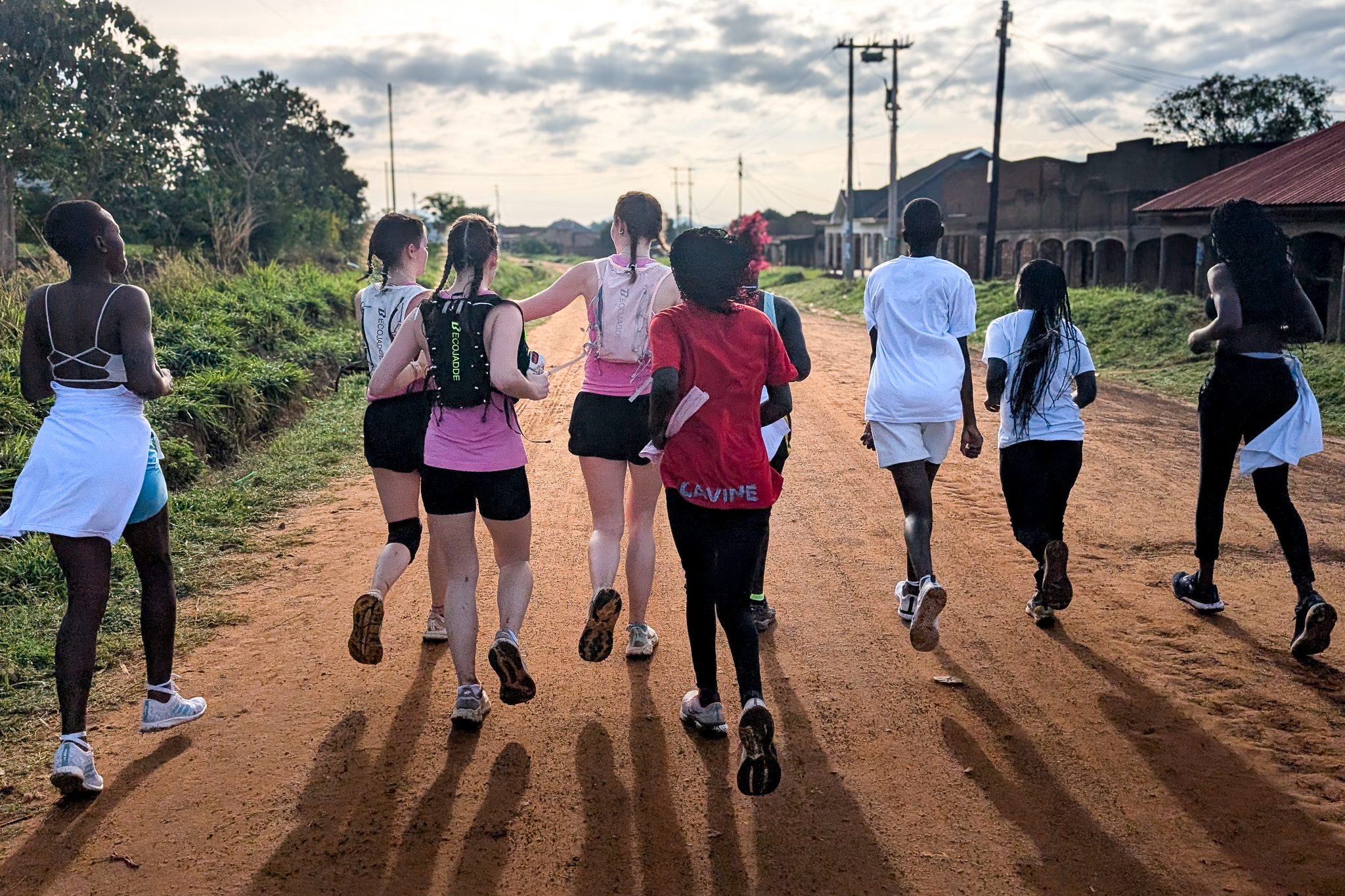
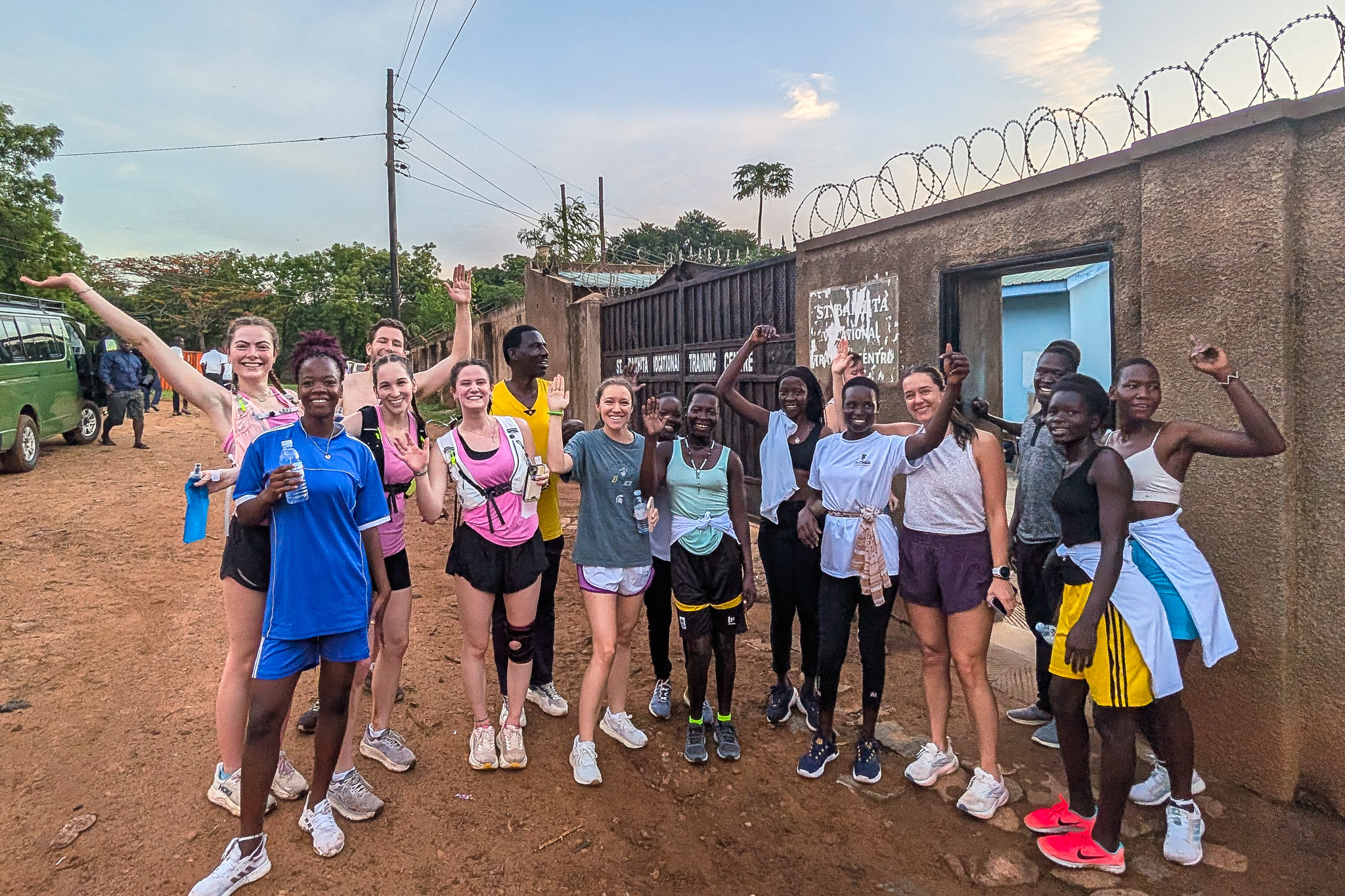
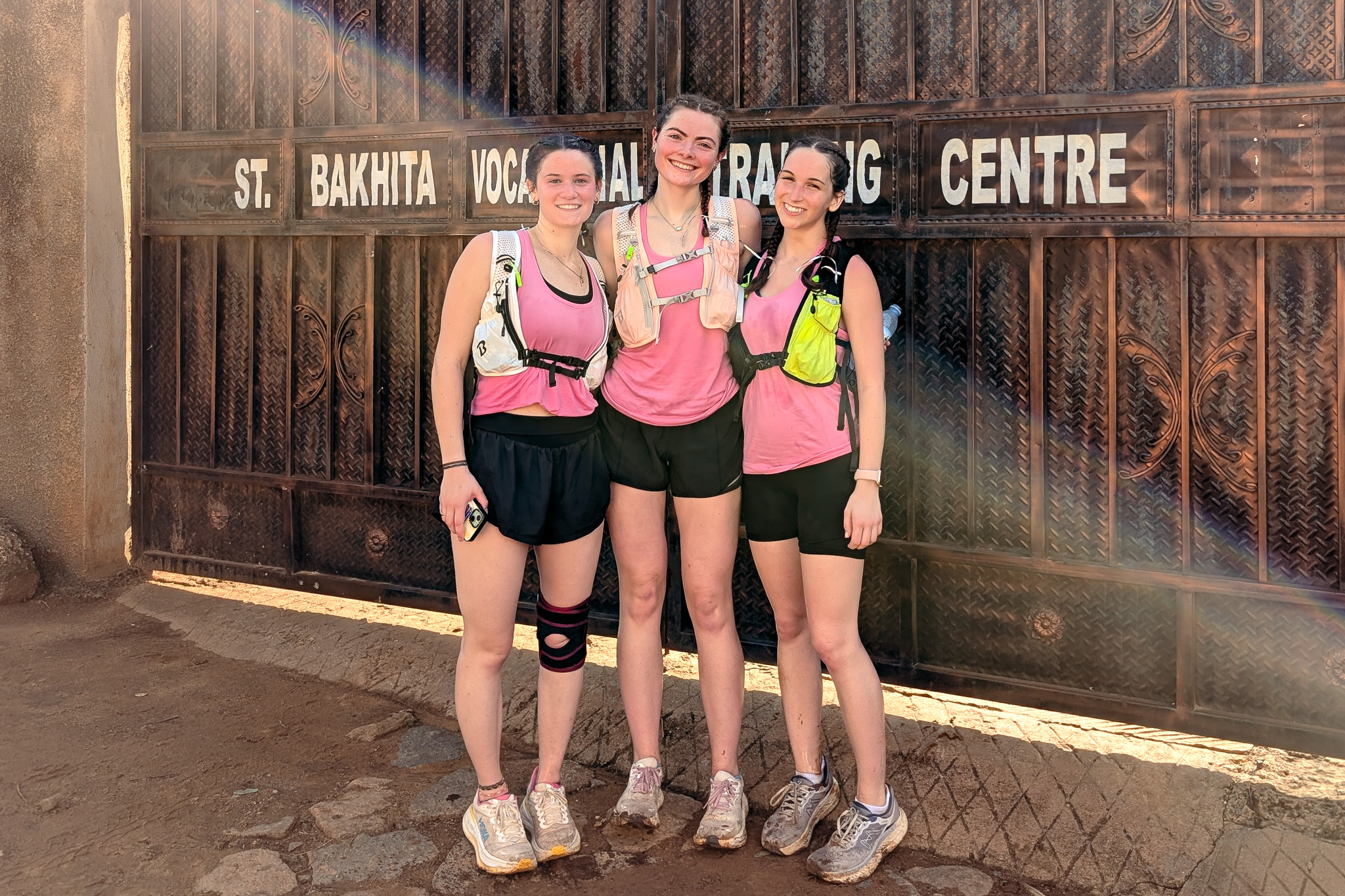
When Suzie, Lucy, and I crossed the finish line, our watches read “26.2,” a marathon completed, but these were only a few of the miles in the race toward women’s access to educational opportunities. Joining the Innovation for Impact Club my first-year year, I never would have guessed it would lead me to running a marathon in Kalongo, Uganda, just a year and a half later.
The marathon project faced many challenges during its early stages, as leadership was passed from Allison Elshoff to Nate Butler to me. Our original goal was to create and run a sanctioned marathon in Uganda and collect funds to benefit St. Bakhita’s. However, one fall semester and many emails later, we hadn't made much progress. We decided to pivot to partnering with an already established marathon in Uganda so we didn't have to plan the event from oceans away, but even after extensive research, the marathons either didn't line up with our Notre Dame breaks or we couldn't get in contact with the organizing committees.
When I inherited the project at the beginning of my sophomore year, I knew a different approach was needed. My team and I began to talk through our options and decided to launch a “trial” marathon. This plan consisted of a few Notre Dame students fundraising and traveling to run the marathon at St. Bakhita’s. We set the date for March, giving us six months to organize a group of runners and fundraise thousands of dollars. As you might expect, I was stressed, but even more determined.
My first step was to find Notre Dame students crazy enough to do this with me. Luckily, I already had two in mind. I approached Lucy Hatch in the dining hall, knowing her passion for running and unwavering positivity would make her the ideal person to take this feat on with me. Lucy says:
“I was hesitant. I honestly thought she was joking. But as I learned more about the trip and the impact our fundraising and running could have, I realized it was something I wanted to be part of. I had no idea at the time that by saying yes to that seemingly crazy ask, my life would be changed.”
The second person was Suzie Hanley, an already-involved member of the club, whose constant enthusiasm and drive became an essential part of reaching our goal.
Now that our team was formed, fundraising efforts and marathon training began. Suzie explains:
“‘Training’ looked like long runs and longer email chains, as we reached out to friends, families, and any organization or company that might be interested in supporting the cause. Not every message turned into a donation, but that was never entirely the point. Fundraising becomes less about hitting a number and more about telling a story as we work to amplify the mission of St. Bakhita’s in places it otherwise wouldn’t reach.”
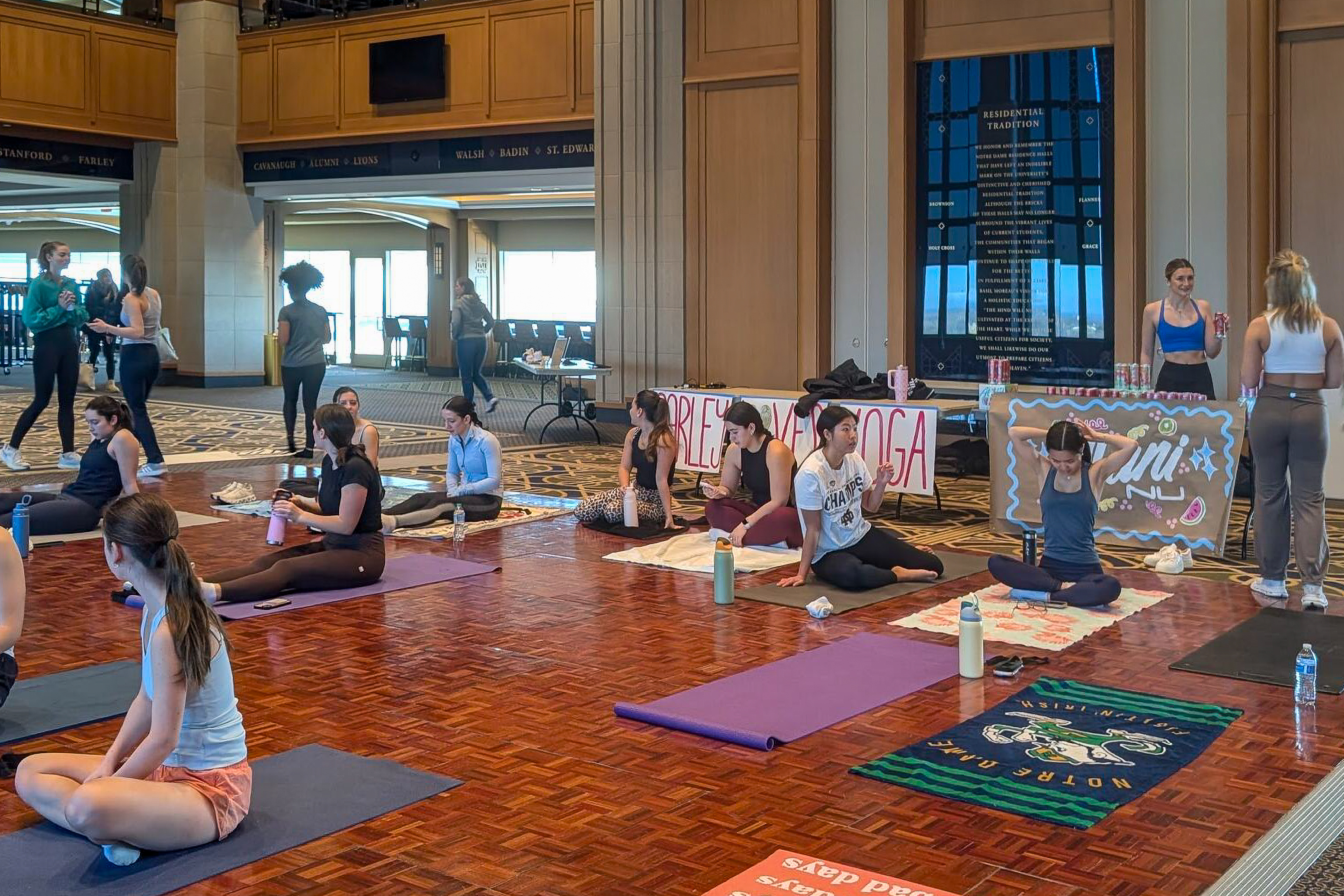
On top of countless emails, we hosted three large events on campus. For “Wellness with a Purpose,” we partnered with Farley Hall to put on a fundraising yoga class open to Notre Dame students. At “Run for Impact,” 70 people signed up to run a 5K in support of our cause. Finally, we held a shoe drive in order to provide the girls of St. Bakhita’s with running shoes, enabling them to run parts of the marathon with us. Through each of these events, we grew the awareness for our cause and continued building our list of supporters.

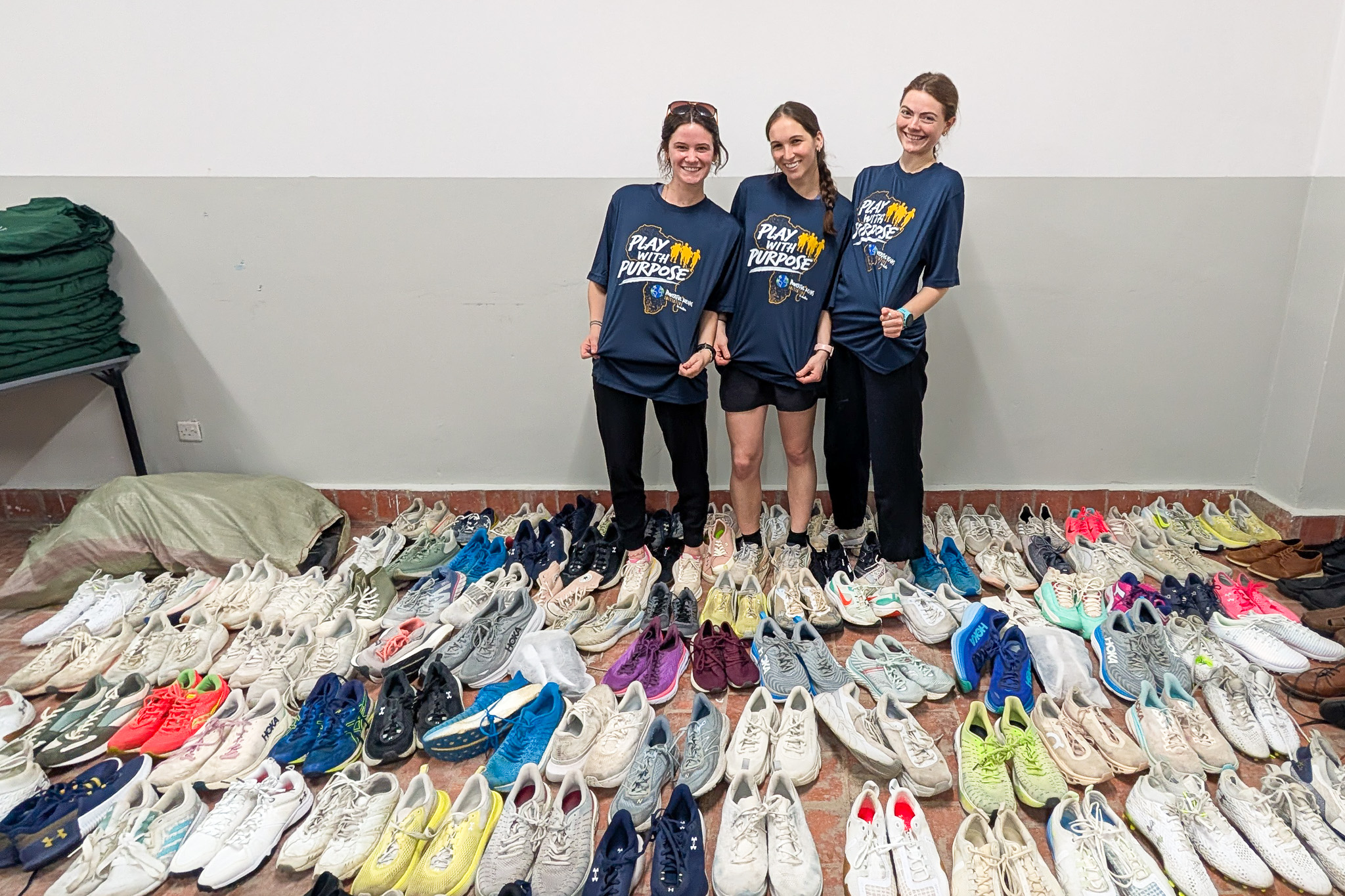
By mid-February, with the help of the club, Lucy, Suzie, and I had raised over $8,600 and collected 142 pairs of shoes. Before we knew it, we would be leaving for Kalongo in just a few weeks. However, we realized we were missing an important piece: a motto for the marathon—one that was short but powerful, reminding ourselves and others why we were taking on this feat.
After much deliberation, we landed on “We Run For Her.” We believed this captured the meaning behind the marathon, doing it for the St. Bakhita’s women and all those in the area who lacked educational opportunities. Arriving at St. Bakhita’s, however, I realized this motto painted an inaccurate picture. These women are some of the strongest, most resilient, and determined women I have ever encountered. They fight through tremendous adversity and every day face a society that sees them as inferior.
We met Betty, a single mother who is achieving her education in order to support her daughter and provide her a future full of opportunity. We met Judith, a deaf woman who travels every morning from a neighboring village to learn tailoring skills so she can start her own business. We met Cinderella, a graduate from St. Bakhita’s who now works at the school and pays to give her little sister an education. Every woman we met had faced so much difficulty, yet you never would have guessed it from their radiating joy and unwavering love. They didn't need someone to run for them; they did that themselves. What they needed was someone to run next to them as they strode toward their bright futures—someone who provided the shoes that allowed them to run faster, someone who cheered as they approached the finish line.
Our motto then evolved into “We Run With Her, Stride By Stride We Run Together.” Running toward a future where women across the globe are supported in their endeavors. Toward a world where women have every opportunity men do. Toward a society where women are valued and treated as equals. This is what our race was for, and together women from Notre Dame and St. Bakhita’s were fighting for it.
We had our motto, and before we knew it, race day had arrived. Lucy recalls:
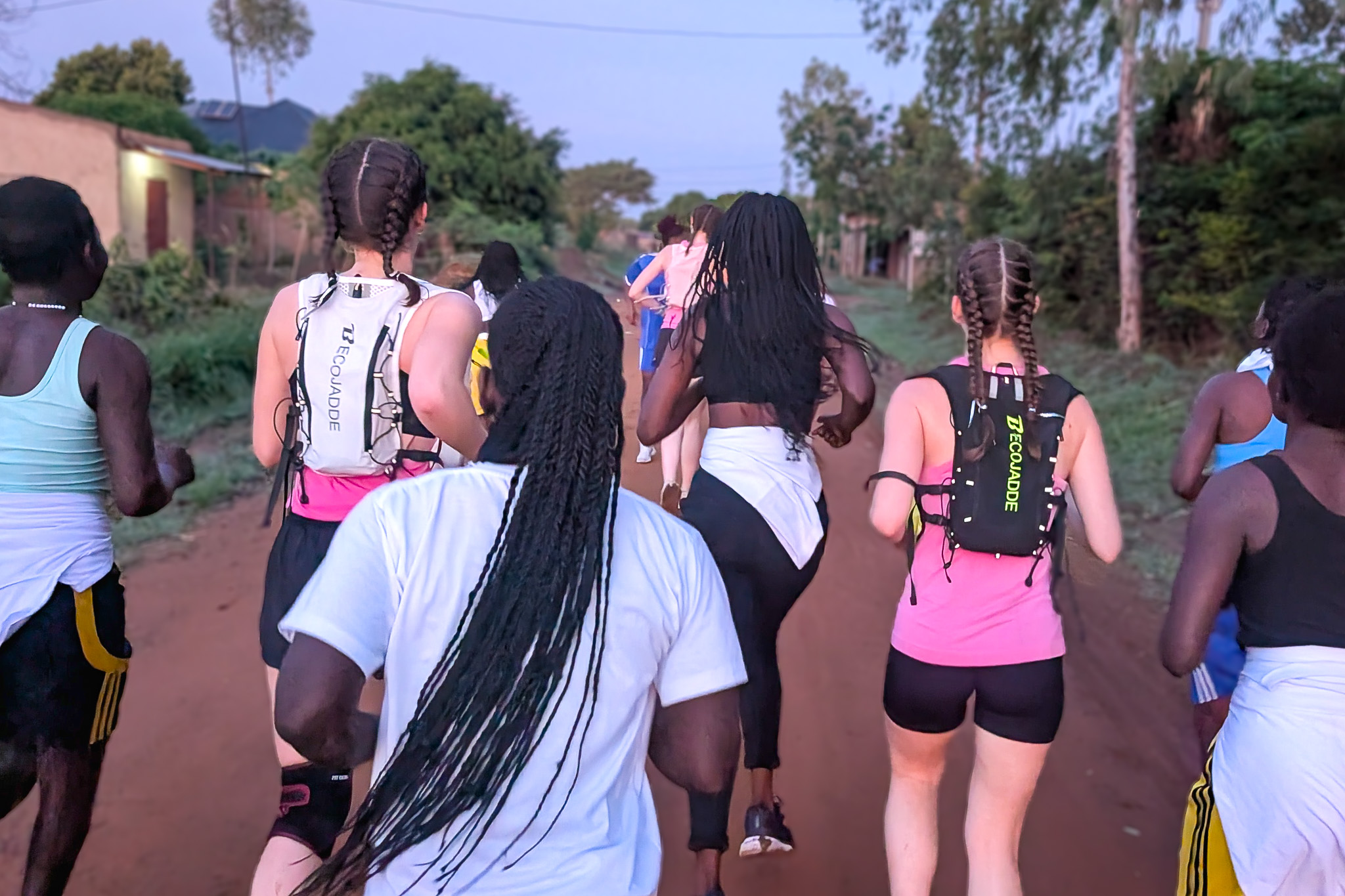
“We began running at 5 a.m., the path dimly lit by a van trailing behind us. The uneven ground made every step uncertain, and the sound of roosters crowing in the distance added to the surreal and daunting nature of the journey ahead. But those feelings quickly faded. By mile seven, the girls of St. Bakhita began running alongside us. In that moment, everything shifted. I was reminded that this effort was never just about me, but about the community and the girls we were running for. The marathon was physically exhausting, and at times, it was difficult to keep going. Yet, all I had to do was look around at the incredible women of Notre Dame and St. Bakhita’s beside me to remember the greater purpose behind every step.”
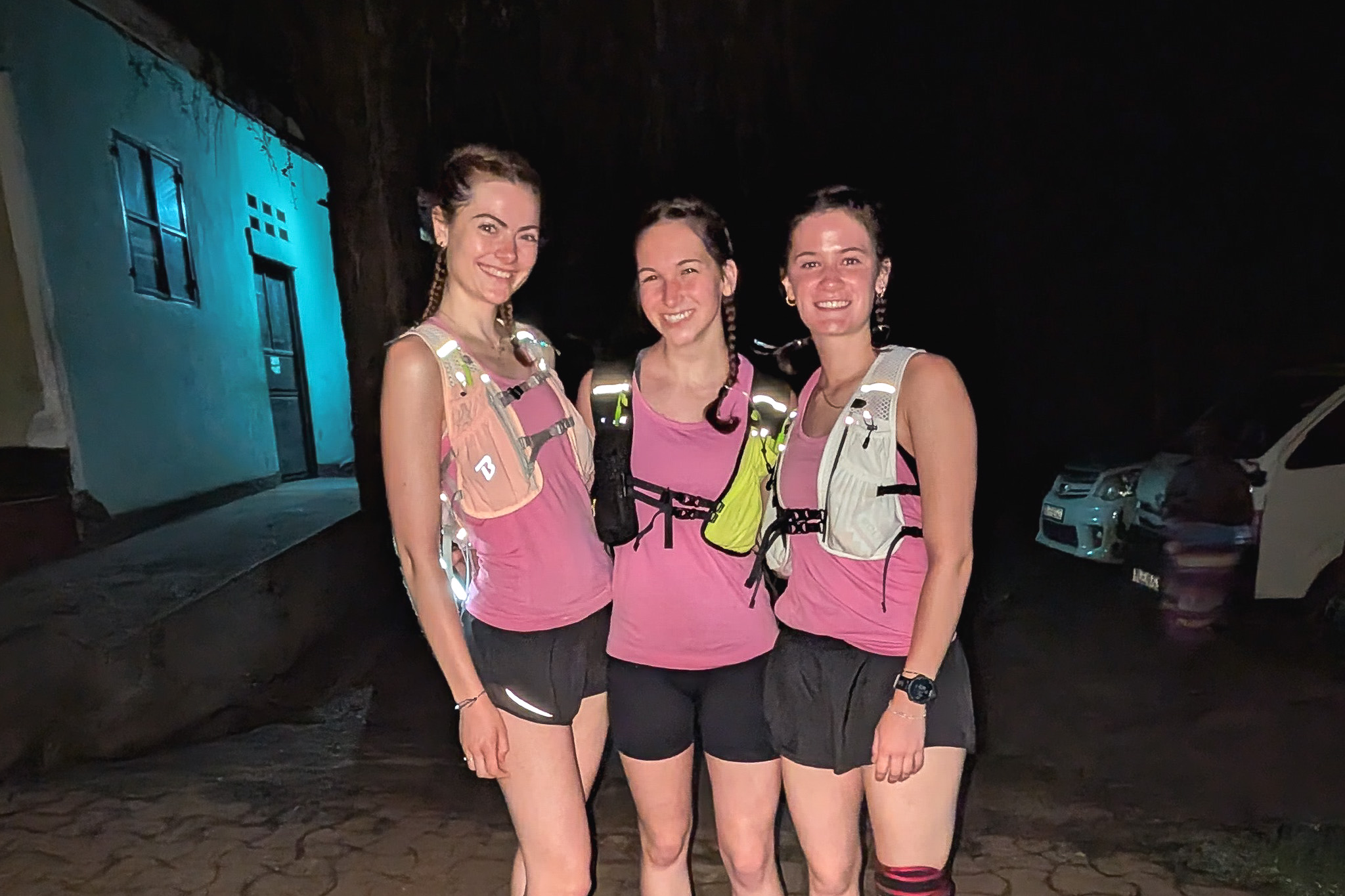
Suzie explains:
“When I think back on this trip, I won’t just remember the marathon. I’ll remember the people, especially the women of St. Bakhita’s, and the way they welcomed us into something bigger than ourselves. What we were a part of doesn’t end at the finish line, but it keeps going, long after we’ve stopped running.”
There are still many more miles to go beyond a marathon to ensure that every girl has the education, support, and resources she needs to move confidently toward her goals. Luckily, there are so many people willing to go the distance, committed to building futures shaped by opportunities rather than limitations.
Annmarie Stallman is a junior studying Marketing and English with a minor in Impact Consulting.