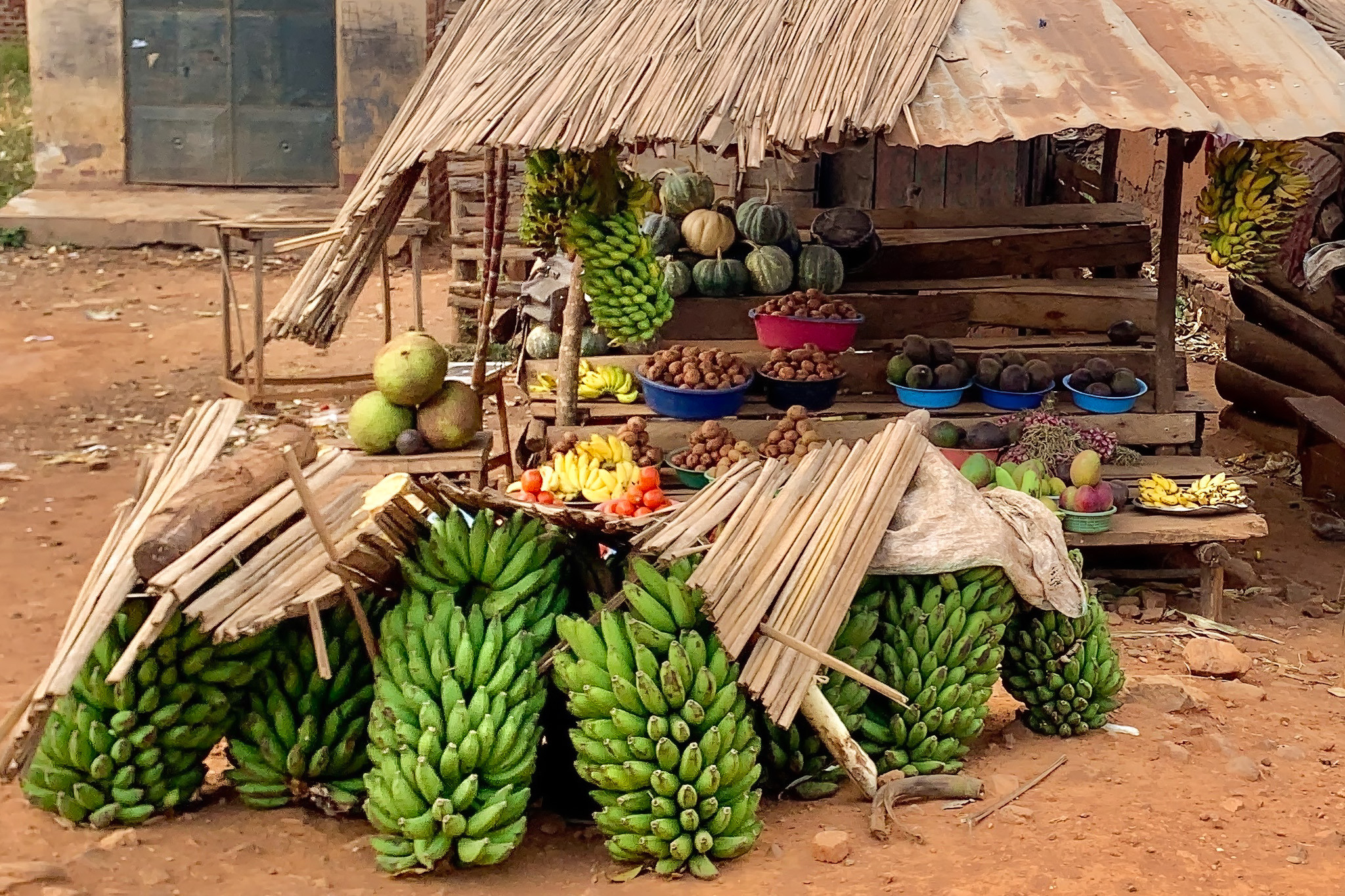
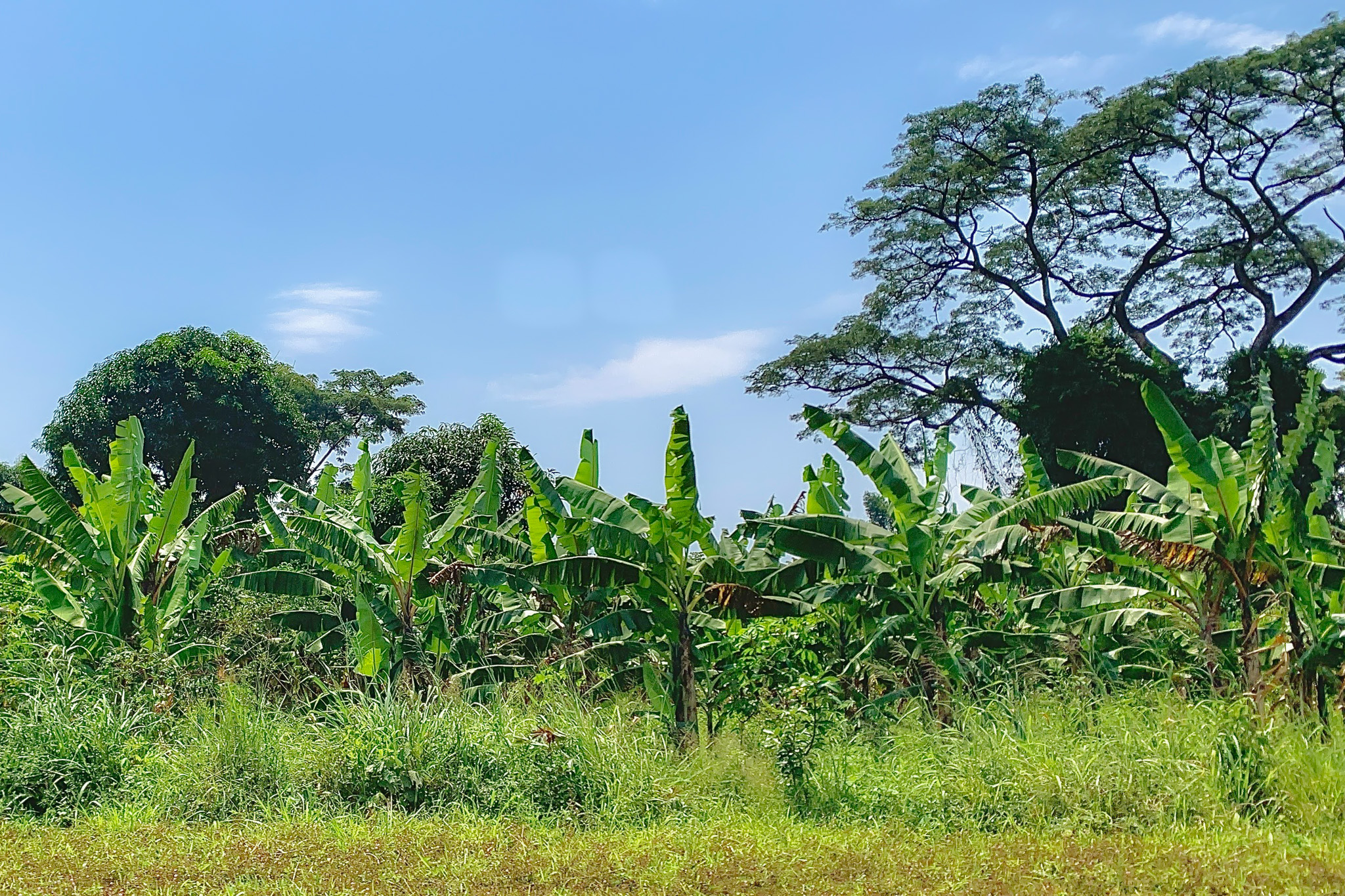
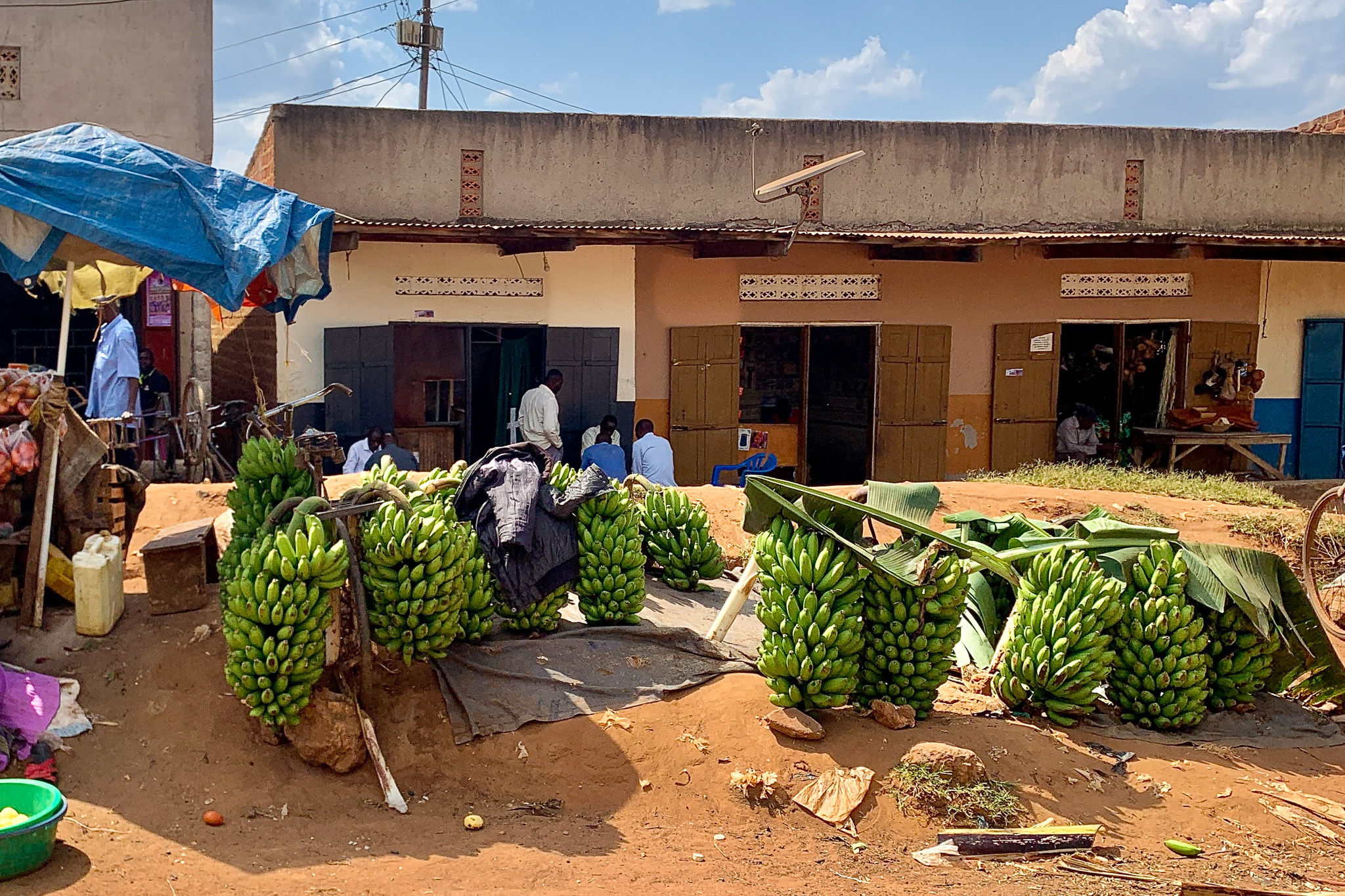
Matooke (mah-toh-kay), which is the local word for banana, is a common crop here in Uganda as it doesn’t require much maintenance and can provide some supplementary income for households. In our own drives and adventures, we’ve frequently seen the trees mixed in with other crops and and alongside houses, and the fruit sold at street-side stands. The trees themselves look rather like small palm trees, with big leafy fronds extending in every direction from the top of the trunk and the dead leaves drooping down alongside the trunk. As for the taste, they’re better than any banana I’ve had in the US. A little sweeter, softer, and full of life.
The availability of matooke is limited primarily by water accessibility, which makes it tougher to grow in the drier climates of northern Uganda, where St. Bakhita VTC is located. That being said, anyone who manages to grow matooke in the north has a good market opportunity for extra income, as there are relatively fewer suppliers than in the wetter, southern districts. Assuming that the water is sufficient, matooke trees start producing fruit in about 12 months from being planted, and then will continue to bear fruit for another nine years.
With hopes of creating some extra sales to support the financial sustainability of SBVTC, and taking inspiration and advice from Dr. Emma Naluyima, her farm manager Washington Mugerwa, and their one acre sustainable-growth farm, we embarked upon the (labor-intensive) mission of planting 50 matooke trees at Innovation Acres.
The first step was ordering matooke suckers from Washington, which are essentially the seeds for new plants. These were brought from Kampala by our driver, Denis Bakita, while we worked on digging the holes. Each hole was a meter wide, 60 centimeters deep, and spaced 10 meters from the next hole. Now, maybe you grew up digging and farming, but I didn’t, so these holes were significantly beyond the small holes I’d ever dug before, in which only a few cubic inches of dirt were moved with a small hand shovel, done rather unwillingly in our family garden beds.
Here, each hole required a shovel, hoe, and anywhere from 30-90 minutes, depending on the person and the soil composition. Between us, I think we dug about 13 of the 15 holes over three trips to the farm, representing roughly 16 hours of labor. The other 37 holes were dug by students and staff of SBVTC, with Principal Victoria Nyanjura even digging a hole herself! I think her statement afterwards was, “Ah! The work is REAL!”
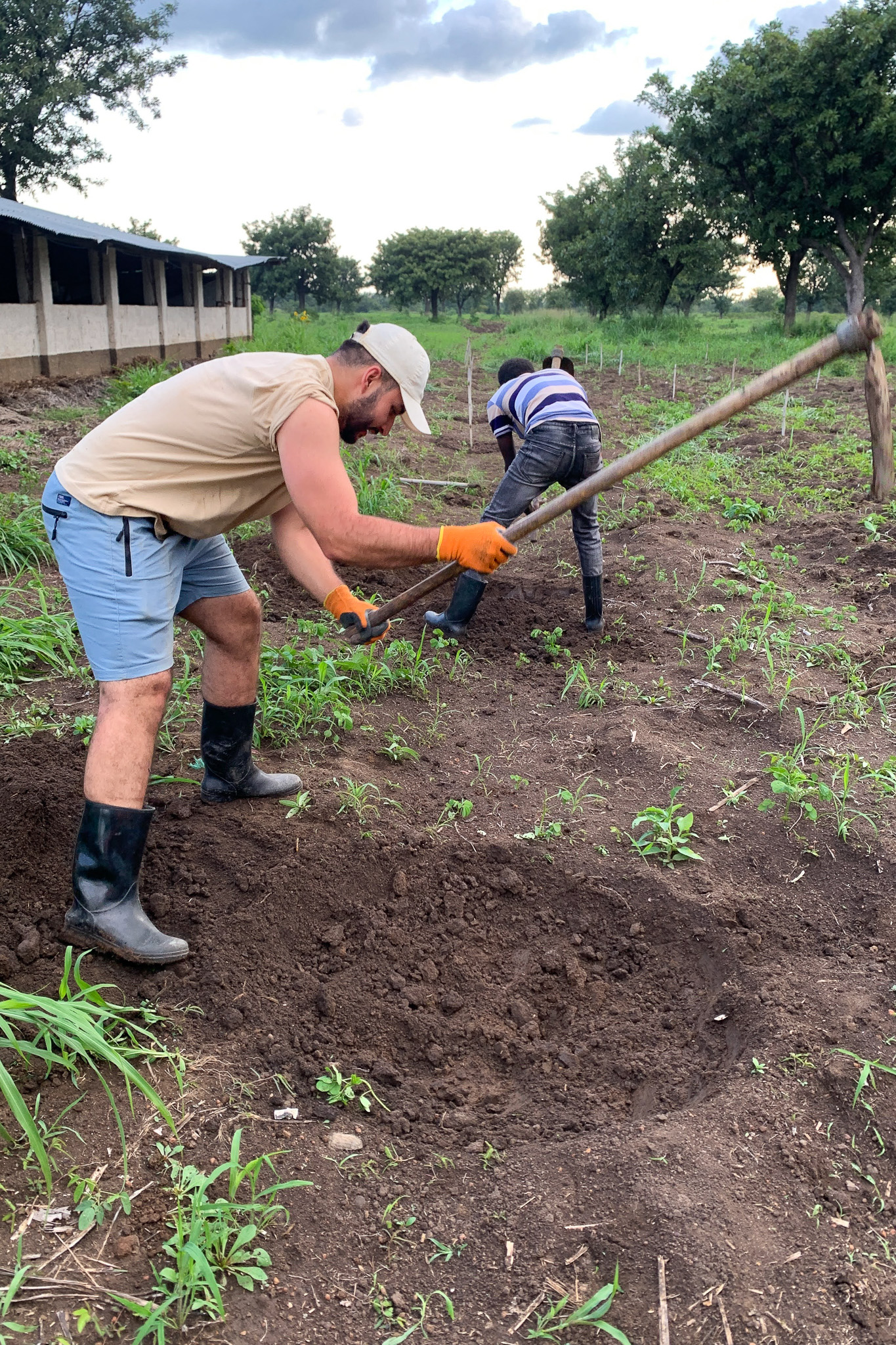
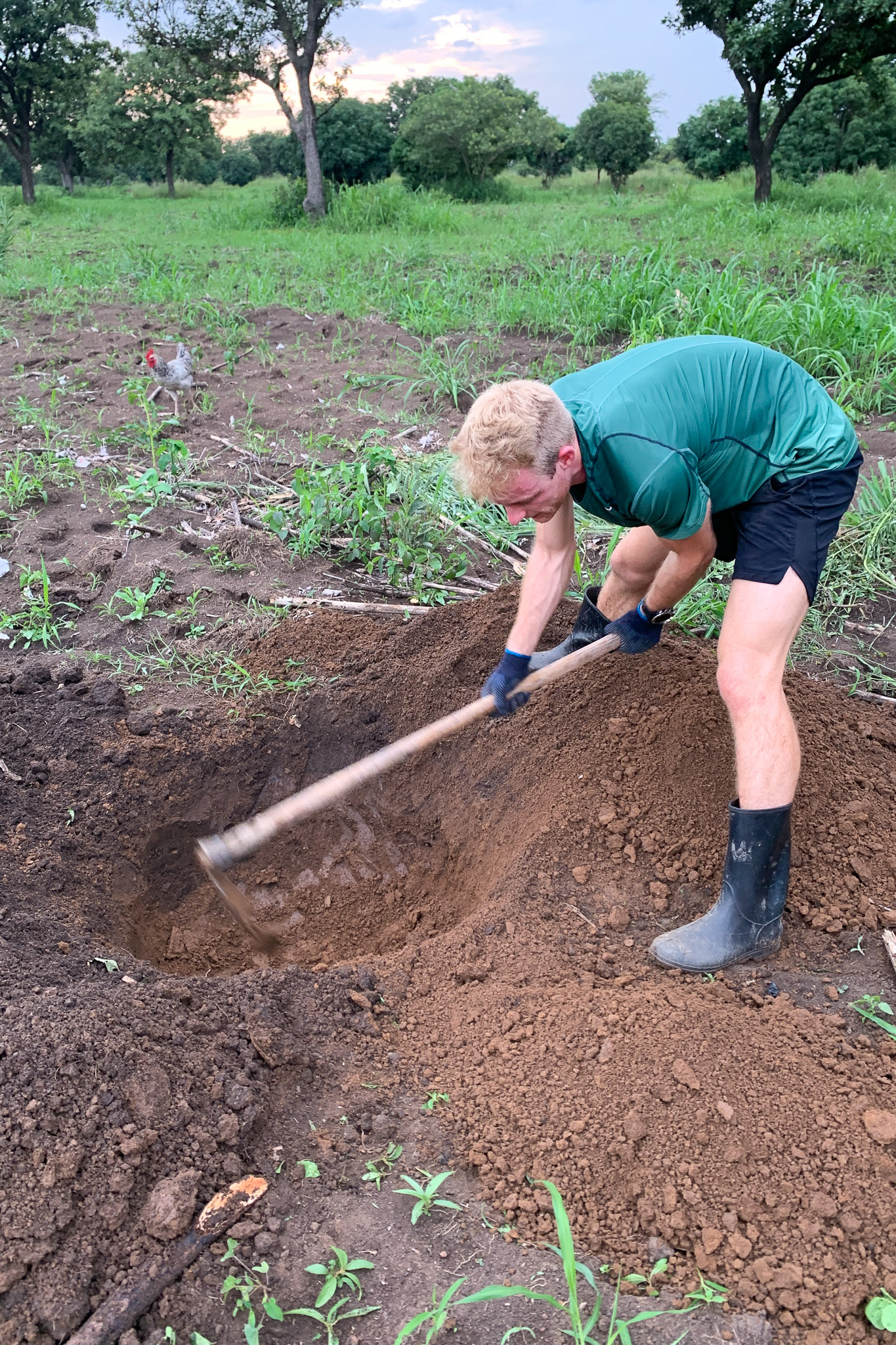
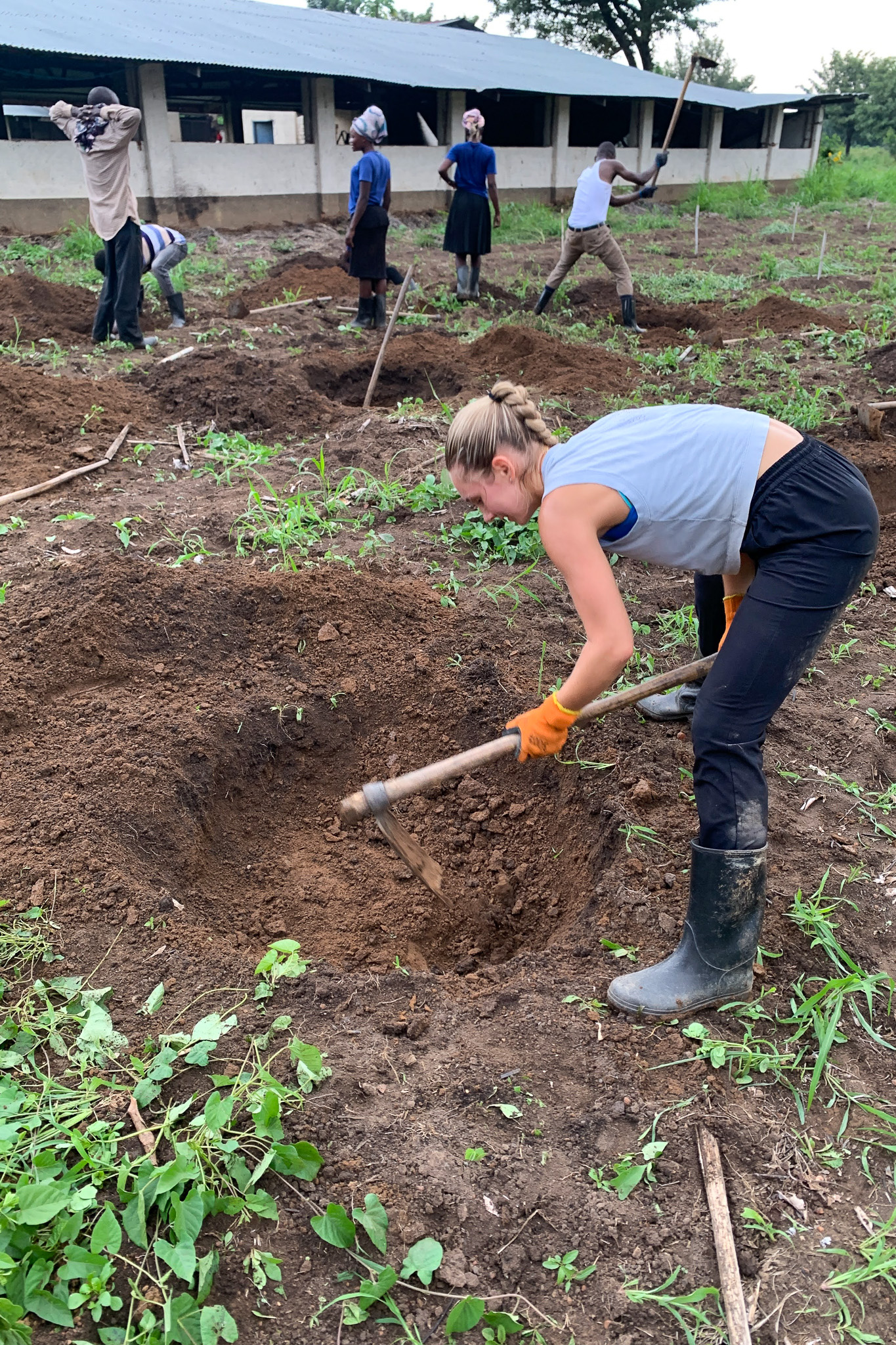
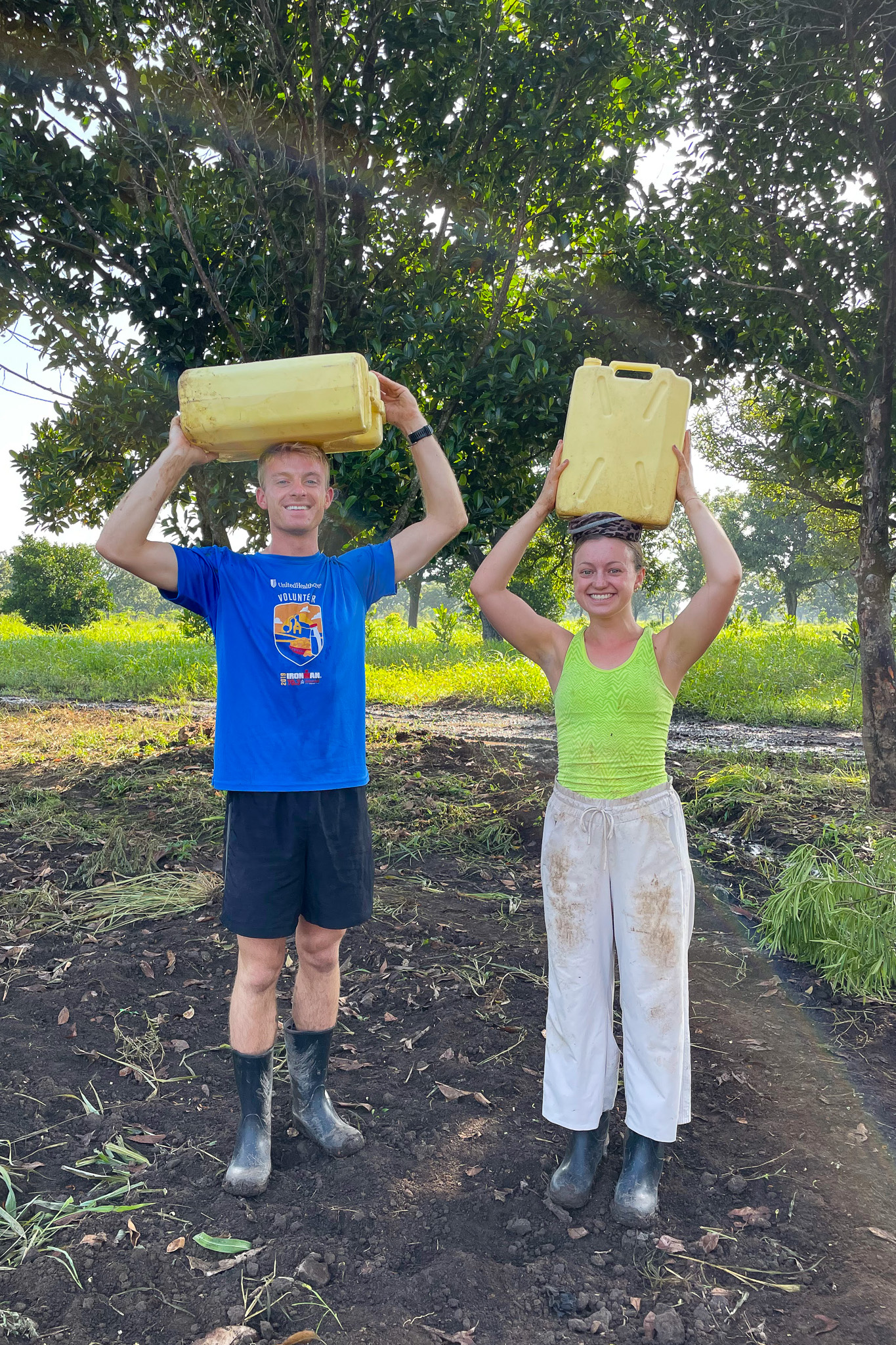
We took away some very sore muscles and several blisters, but a keen sense of satisfaction for having completed such a task. There was still work to be done, though. A layer of manure was added into each hole, followed by a layer of top soil. Then, each matooke sucker was soaked in pesticide for half an hour before getting placed in the hole and covered with the remaining topsoil that was removed during digging. Finally, 20 liters of water went in, forming a ring of water around the buried sucker. If you imagined a green garden hose conveniently snaking its way to each hole, unfortunately this was not the case. If you pictured plastic jerrycans of water being carried atop the heads of the workers, you were spot on. And this time it was the Saint Bakhita students teaching us the technique, demonstrating a several different ways that one could carry a jerrycan of water from a well to its intended beneficiary.
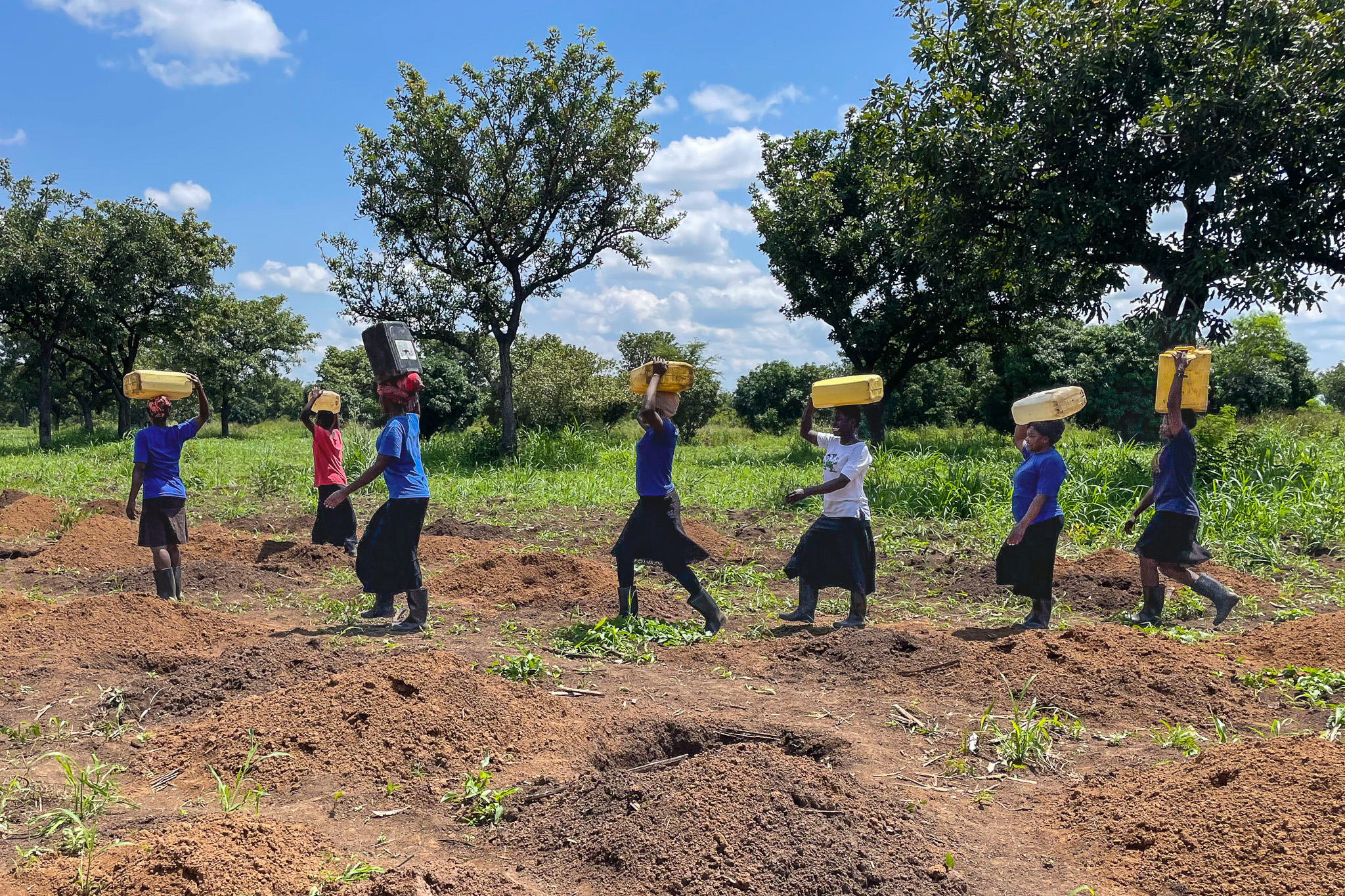 20 liters is no joke. I struggled to even get the jerrycan above my head, and once up there, it sat heavily, pressing down on my head and neck. Thankfully our walk was only 150 meters or so, maybe 2-3 minutes, thanks to the farm’s well and pump nearby. For many in the rural Kalongo area, walks of a kilometer or more are not uncommon.
Eventually, we got water to all of the holes and wished our very best to the little suckers. The farm manager, Geoffrey, and the students of St. Bakhita will be responsible for watering the trees as needed until they can care for themselves, but we are optimistic that this grove of matooke might be a relatively passive income-generating source to help St. Bakhita on its path to long-term success. And I think we’re all hoping to return next year to taste the fruits of our labor!